
The shirt you pick can make or break how you look and feel that day. Something as simple as whether it’s too long or short impacts everything from your style to your comfort level to your self-assurance.
Men’s fashion moves fast. To always look your best, get the basics down. One of the fundamentals of a great-looking shirt is the length. It needs to hit just right.
Tuck in your shirt or don’t—the length matters either way. In this guide, we’ll talk about what makes a shirt the perfect length for you, the different casual untucked styles out there, and how to choose a length based on how you’re built and the look you want.
Tucked-in shirts:
- Generally around 30-34 inches for an average-height man, but consider your specific body proportions when selecting the ideal length.
Untucked shirts:
- Length should be around 26-32 inches, depending on body type and desired fit.
What should the tucked-in shirt length be?
A well-groomed tucked-in shirt is a classic style that can make you appear taller, slimmer, and more put-together. The length of a tucked-in shirt is crucial to maintain a neat and sleek appearance throughout the day. Here are some factors to consider for the perfect tucked-in length.
Length reaching the bottom of the buttocks
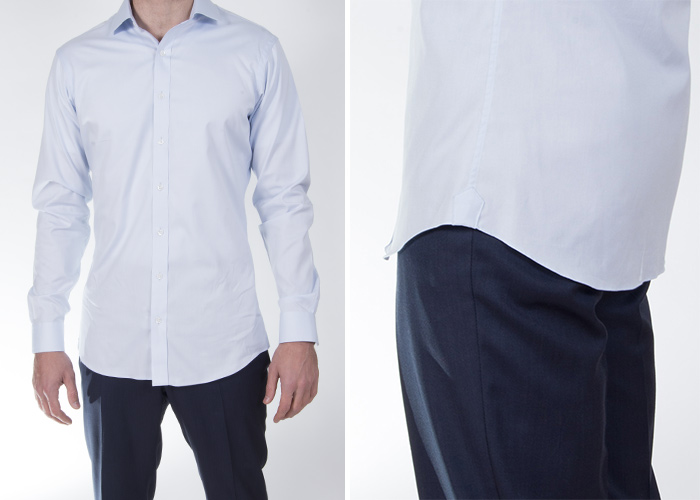
First, you want your shirt to cover your butt, or even a bit lower. This means it’ll stay tucked in and not get messy or untucked when you move. It’ll also make your front look neat and tailored.
High-waisted vs. low-waisted pants
Where you wear your pants—high up or low slung— makes a difference too.
- High-waisted trousers? You’ll want a longer shirt to tuck in nice and neat.
- Lower-rise jeans or chinos? Go shorter so you don’t end up with a mess of wrinkled-up fabric spilling out.
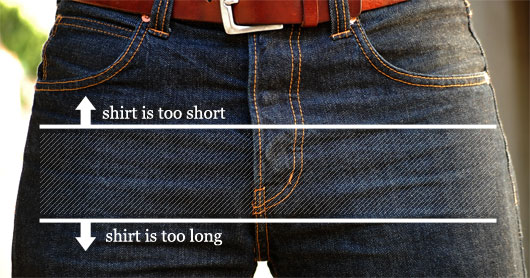
The sweet spot is a shirt end that hits around the mid-zipper or belt line. That gives you enough length to tuck in if needed but won’t leave you swimming in extra cloth if you don’t.
Body type
The way your body is naturally built makes a significant difference in how a shirt will sit tucked in.
If you are a man who struggles with extra weight around the midsection, it is best to choose a shirt that is on the longer side so you have enough fabric to fully tuck in over your belly. Excess shirt fabric will help create a smoother, more streamlined silhouette under your belt line.
For those of you with a slimmer, athletic physique, avoid going overboard with an excessively long shirt. An overly long shirt on a trim frame will simply look baggy and disproportionate when tucked into your pants. A properly fitted shirt for your build that just reaches the top of your hips is ideal. It will stay neatly in place without billowing out.
Shirt style and cut
The style and cut of the shirt itself also affect how long it should be to tuck in. A dress shirt with a long tail needs more length to look tidy, while a shorter casual shirt doesn’t need as much. And a slimmer-fitting shirt may need to be a bit shorter than a loose, regular fit.
It’s really important to consider all these things when choosing a tucked-in shirt length. You want to look polished, whether dressing up or keeping it casual. The right length shirt that suits your body and style will make all the difference.
What should be the untucked shirt length?
Getting the right length for an untucked shirt is important if you want to look casually stylish but not messy. Here are some tips for choosing an untucked shirt length that works:
Length reaching the middle of the buttocks
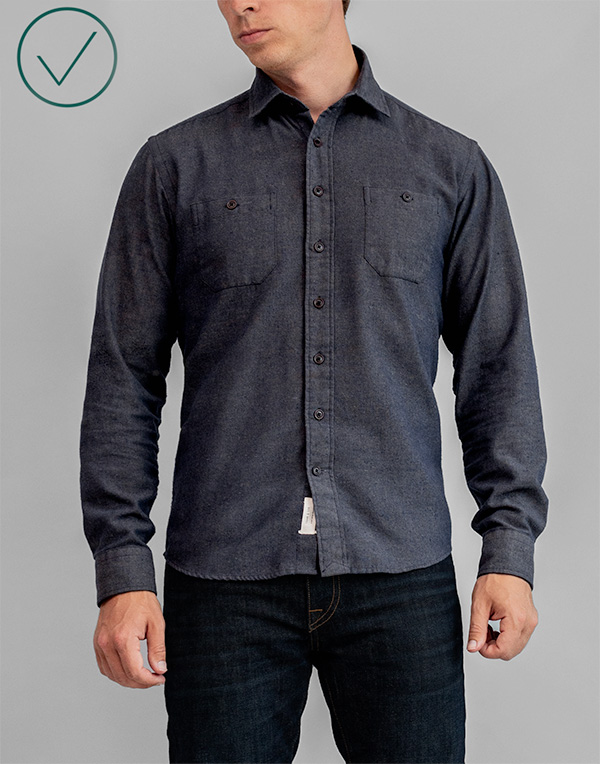
A good rule of thumb is that the shirt should fall to the middle of your butt. This looks balanced and intentional, especially for button-down shirts.
Get The Hemline Right
The edge of the shirt hemline in front should fall roughly midway down the fly or closure flap of your pants. But again, every man’s build and torso length is unique. A single suggestion does not suit all. The foolproof method for determining your ideal tucked-in shirt length is straightforward.
Select a collared shirt from your own wardrobe that you believe looks well-fitting when worn untucked. Use a tape measure to carefully measure the center back length starting from the shirt collar base and running down to the bottom hem edge. Apply that measurement to help determine if the shirts you currently own need hemming or not. And use it as a guide when shopping for new tailored shirts
Shirt style and cut
The specific style and cut of the shirt also determine the best-untucked length. T-shirts, button-downs, and polos all need different lengths. Slim fit and regular fit shirts may also need different lengths, depending on your body type and style.
Your body type
Consider your body type when picking an untucked shirt length. If you have a bigger belly or wider hips, go for a slightly longer length for the most flattering look. If you have an athletic or slim build, don’t go too short or the shirt will look out of proportion.
Factoring in all these elements when choosing the perfect untucked shirt length, you can craft a stylish, comfortable look tailored to your body and personal style. The key is hitting the sweet spot between relaxed and purposefully stylish. With the right untucked shirt length, you’ll look casually fashionable, not disheveled.
Shirts for Different Body Types
Finding shirts that fit well depends on your body type. Different styles and lengths work better for different people. Here are some tips for picking a shirt length that flatters your body:
1. Optimal shirt length for men with larger bellies
If you have a bigger stomach, go for a longer shirt. You need it long enough to tuck in neatly and stay tucked in when you move around. An overly short shirt will just look messy and come untucked all the time. Even untucked shirts should be long enough to cover your belly without looking huge.
2. Adjusting the shirt length based on the number of buttons
Keep in mind that the number of buttons on the front depends directly on the length of the back. The standard positions for the top button and how the shirt hangs will determine how many buttons you need based on how long the shirt is. So if you change the shirt’s length, you’ll end up with more or fewer buttons, which can change the overall look and fit.
Perfect shirt length, tucked or untucked
Finding shirts that hit just the right length is key to putting together a wardrobe you feel good in. The perfect length for you depends on a few things: your body type, the kind of shirt it is, and your own personal style. By paying attention to all these factors, you can find shirts that look and feel perfect for you.
Don’t be scared to try out different lengths and styles until you land on one that suits your shape and tastes. A length and style that flatters one person might not work for someone else. The only way to find out what’s right for you is to take the time to experiment.
With some trial and error, you can discover the ideal shirt length and style to build a wardrobe that gives you confidence and comfort. The right balance of length and fit can make a world of difference in how you feel in your clothes. Use the tips about body type and style as a starting point, but ultimately go with what makes you feel the most like yourself.
